
PGA TOUR Best Ball: Underdog Guide for The Scramble


As the NFL season concludes and winter settles in, the PGA TOUR season kicks into high gear, bringing PGA TOUR best ball tournaments with it. Whether you’re seeking winning strategies, understanding tournament mechanics, or finding ways to stretch your bankroll across multiple entries, this guide has you covered.
This article focuses on The Scramble for 2026, an exclusive PGA TOUR best ball tournament available only on Underdog. New users can use Underdog promo code GRINDERS to play $5 and receive $75 in bonus entries.

The Scramble Format
The entry fee is $10 per lineup. You’ll be placed in a draft with 6 other players, each selecting 12 golfers. Your draft position is randomly assigned once the draft reaches capacity. The format works like a standard draft with a 20-second selection timer, though an alternative option allows eight hours per pick—ideal for those who prefer drafting without being glued to their device.
Rosters feature 12 golfers, but only six count toward your weekly score. A critical strategy is ensuring you have at least six active golfers each week. We’ll explore this further below.
The PGA TOUR Schedule
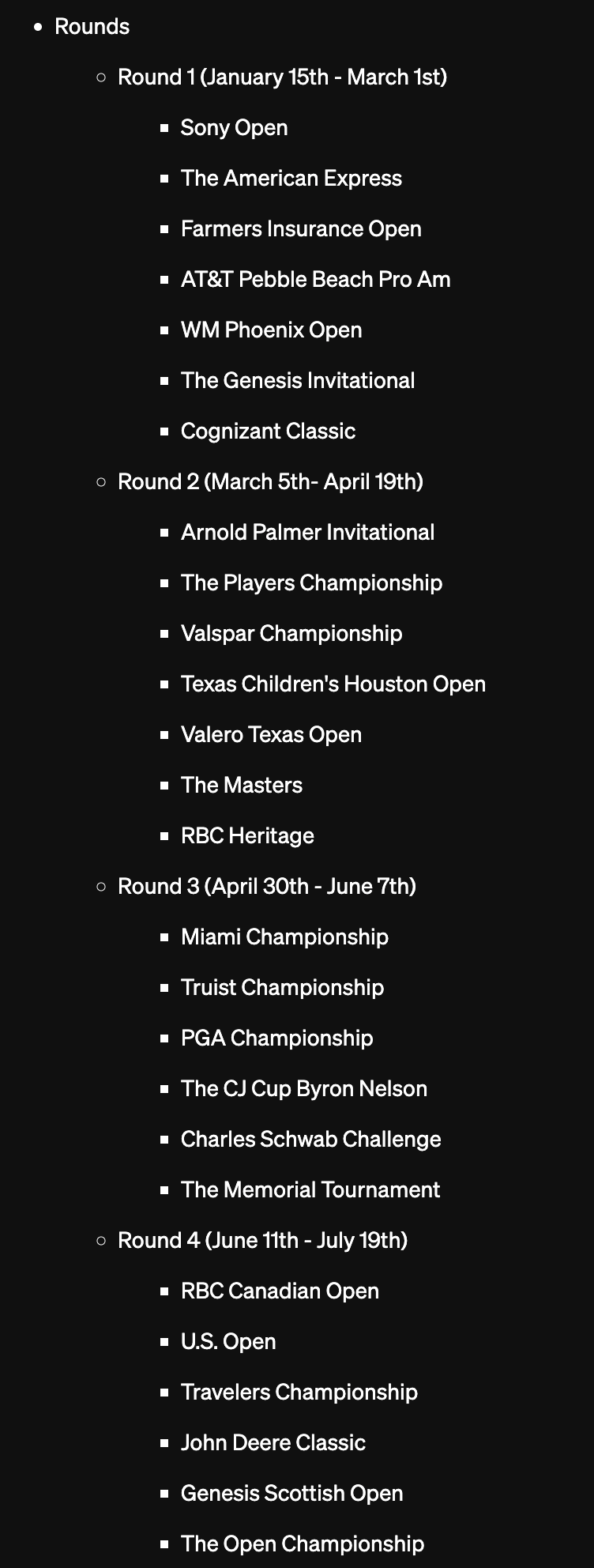
The PGA DFS contest spans 4 rounds, each featuring a designated set of PGA TOUR events. You can see the specific events for each round in the breakdown.
One important factor to consider during drafting is the presence of signature events—limited-field tournaments where only qualified golfers can compete. Below are the signature events for 2026:
- AT&T Pebble Beach Pro-Am
- The Genesis Invitational
- Arnold Palmer Invitational
- RBC Heritage
- Miami Championship
- Truist Championship
- The Memorial Tournament
- Travelers Championship
The Scramble Scoring Format
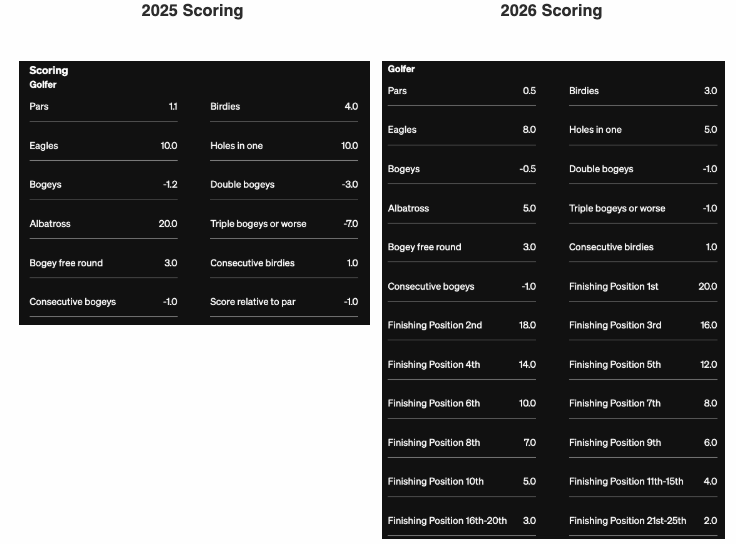
The 2026 Scramble introduces significant scoring changes that reshape drafting strategy. Golfers now earn points for finishing position—a new feature that rewards rosters with higher-caliber players. Previously, the emphasis was on volume (drafting players who would see maximum playing time). While playing time remains important, Underdog has shifted the priority toward player performance this season.
Additionally, under-par holes award fewer points, while over-par holes incur smaller penalties. The table below compares The Scramble’s 2025 and 2026 scoring systems.
Advancing in The Scramble
The tournament features 4 rounds across multiple stages. The first 3 rounds pit 6-person groups against each other, with the final round culminating in a 261-person competition for the $50,000 grand prize. To advance, you must finish first in your 6-person pod—the sole path forward unless the tournament fails to fill and wild-card spots become available.
Prizes for The Scramble
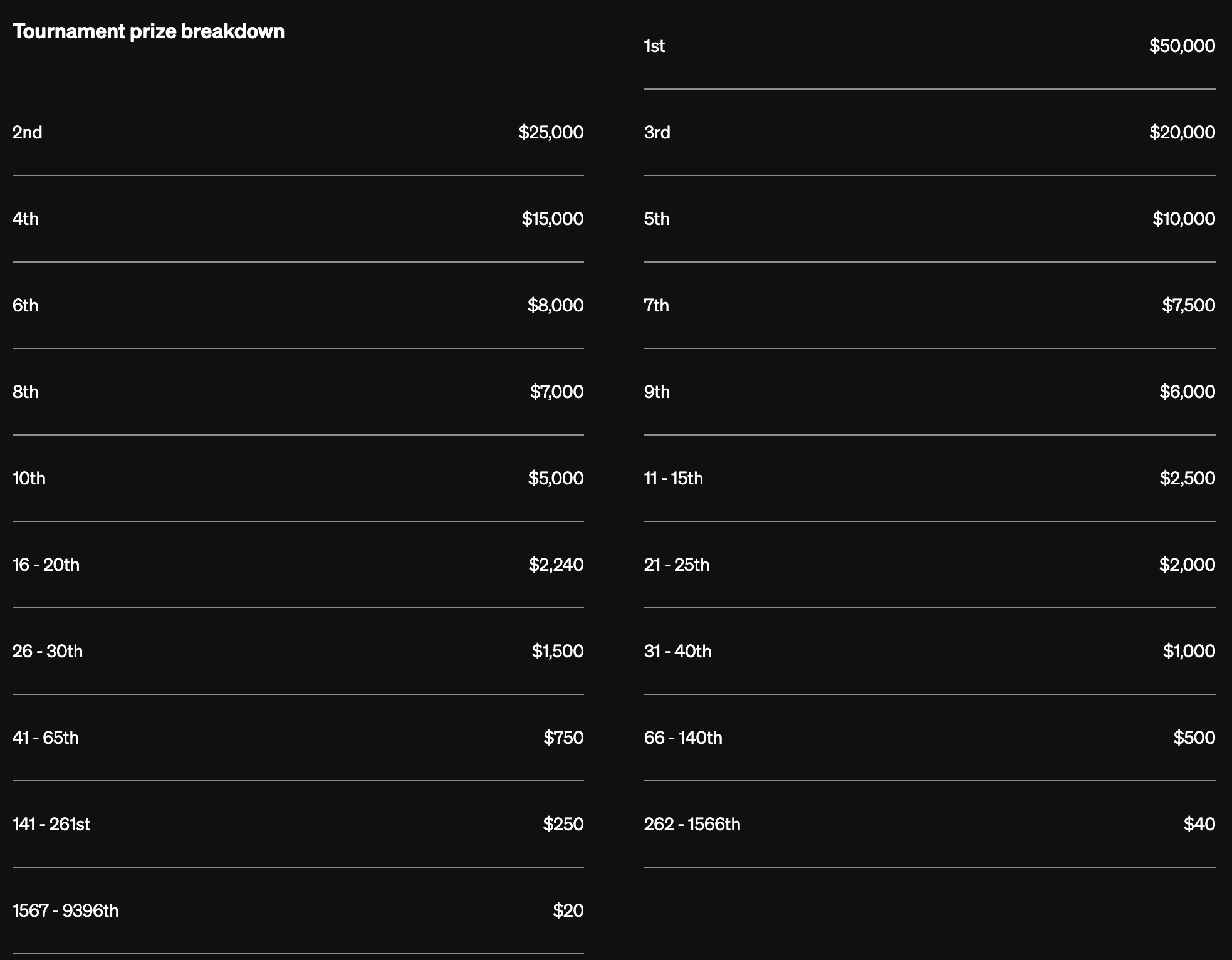
The Scramble’s grand prize is $50,000. Reaching the 261-person final guarantees a minimum prize of $250, while advancing past the 1st round nets you $20—doubling your $10 entry fee.
See the breakdown above for the complete prize pool structure.
The Scramble Strategy – How To Draft Correctly
This format prioritizes selecting golfers with high playing time. However, signature events complicate this strategy—you’ll need a balanced roster of golfers who have already qualified for these limited-field tournaments alongside those competing to earn spots.
How do golfers qualify for signature events?
- Top 50 in the prior season’s FedExCup Standings
- Aon Next 10: Top 10 in the current year FedExCup Standings (not otherwise exempt)
- Aon Swing 5: Top 5 FedExCup points earners between signature events (not otherwise exempt)
- Current-year tournament winners (full FedExCup points events)
- PGA TOUR members ranked in the top 30 in the OWGR
- Sponsor exemptions
Golfers finishing in the top 50 of last season’s FedExCup standings automatically qualify for all signature events during the 2026 PGA TOUR season. Below are the golfers who earned automatic qualification for this season by placing in the top 50 of last season’s FedExCup standings:
Top 50 in FedExCup Standings
| Tommy Fleetwood | Patrick Cantlay | Russell Henley | Corey Conners | Scottie Scheffler |
| Cameron Young | Keegan Bradley | Sam Burns | Justin Thomas | Chris Gotterup |
| Ben Griffin | Viktor Hovland | Akshay Bhatia | Harris English | Brian Harman |
| Shane Lowry | Harry Hall | Robert MacIntyre | Collin Morikawa | Nick Taylor |
| Ludvig Aberg | Justin Rose | Rory McIlroy | Maverick McNealy | Andrew Novak |
| J.J. Spaun | Jacob Bridgeman | Sungjae Im | Hideki Matsuyama | Sepp Straka |
| Michael Kim | Rickie Fowler | Taylor Pendrith | Matt Fitzpatrick | Kurt Kitayama |
| Lucas Glover | Si Woo Kim | Sam Stevens | Ryan Gerard | Denny McCarthy |
| Jason Day | Xander Schauffele | Ryan Fox | Thomas Detry | Daniel Berger |
| Brian Campbell | Bud Cauley | Tom Hoge | J.T. Poston | Jhonattan Vegas |
Players who finished in the top 10 of the FedExCup automatically qualify for the first two signature events via the Aon Next 10—encompassing all signature events in the 1st round. Below are the 10 players who earned qualification for these events:
AON Next 10 Qualifiers
- Sami Valimaki
- Max Greyserman
- Garrick Higgo
- Rico Hoey
- Nico Echavarria
- Aldrich Potgeiter
- Chris Kirk
- Aaron Rai
- Min Woo Lee
- Max McGreevy
While these 10 players will compete in the first two signature events, their status for remaining events is not guaranteed like the top 50. These spots are revolving—players must earn continued participation through non-signature events to secure spots in future signature tournaments. This is where the Aon Swing 5 comes into play.
We won’t know these qualifiers yet, as they’ll be determined by the top five FedExCup points scorers across the Sony Open, American Express, Farmers Insurance Open, and WM Phoenix Open. The Aon Swing 5 points reset after each signature event cycle, allowing the hottest golfers to compete in signature events they wouldn’t otherwise qualify for.
The Scramble: Proper Roster Construction
Ideally, you want a balanced roster of players who have qualified for all signature events alongside golfers who haven’t qualified and will compete in numerous non-signature events seeking qualification. This year’s format adds a strategic layer: since finishing positions now award points, prioritize the highest-performing golfers among those competing in non-signature events for qualification opportunities. Let’s examine one of my drafted rosters and walk through my approach.
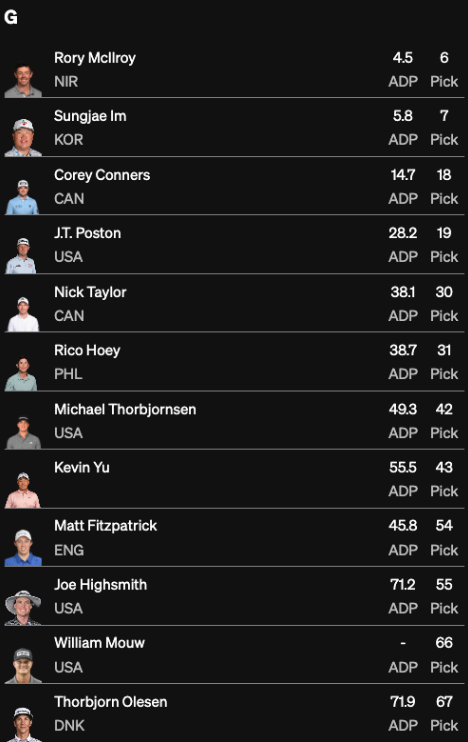
On this roster, I’ve selected six players who qualified for all 2026 signature events: McIlroy, Im, Conners, Poston, Taylor, and Fitzpatrick. I also included Rico Hoey, who qualified for the first two signature events. Assuming these 7 players compete in all events they’ve qualified for, I’ll have a full roster of 6 golfers across every 1st-round signature event. The remaining 5 roster spots go to players competing primarily in non-signature events—Olesen, Mouw, Highsmith, Thorbjornsen, and Yu—seeking qualification.
I’m also assuming these already-qualified golfers will participate in non-signature events. Another key consideration is player age. Younger golfers without families typically play more events than their older, married counterparts. For instance, I’m fading Tony Finau this season despite his lack of signature event qualification.
While he may play more to earn qualification, his large family likely limits his availability compared to single players. Conversely, young players like Michael Thorbjornsen play extensively—he appeared in 25 events last season—and I expect similar volume as he pursues signature event qualification from outside the threshold.
Late-Round Targets
This is a list of golfers who I think will play a lot of golf and play well enough to play into signature events:
- Michael Thorbjornsen
- Rico Hoey
- Thorbjorn Olesen
- Nicolai Hojgaard
- Rasmus Hojgaard
- Takumi Kanaya
- Karl Vilips
- Kevin Yu
- Michael Brennan
- Ryo Hisatsune
- William Mouw
- Eric Cole
- Erik Van Rooyen
- Mac Meissner
Thank you for reading. The Scramble is undeniably complex, but those willing to invest in research gain a significant edge—most players simply draft the highest-ranked golfers.
Understand the format, execute your strategy, and good luck with your drafts!
If you’re making golf picks outside of the Underdog Scramble, check out the PGA weather report from Kevin Roth.
Image Credit: Imagn