
2018 Risers and Fallers: Volume 4

Welcome back to another season of Risers & Fallers! Last year in this space, I turned you onto first-half Alex Wood because of his increased velocity and incredible curveball pitch tunneling. I told you Justin Verlander would be fine. I told you Seth Lugo’s insane curveball spin rate didn’t make him a good pitcher and that Aaron Nola’s low swinging strike percentage didn’t matter.
This is where I dive deep into the numbers and the narratives and see what’s real and what isn’t using advanced metrics, my DFS projection system (THE BAT, available in the RotoGrinders Marketplace), and insights from my scouting background. I’ll examine guys whose stock is going up, guys whose stock is going down, guys who are perpetually underpriced or overpriced, guys who are worth paying a premium for, or guys who are just interesting and warrant some analysis on.
Rising… and Very Sneaky
Anthony Banda, RP, Tampa Bay Rays – Tommy John surgery
Ryan Yarbrough, RP, Tampa Bay Rays
Austin Pruitt, RP, Tampa Bay Rays
The on-field operations of baseball teams are still run in large part by the old school baseball man’s way of thinking, but there is a growing contingent of forward-thinking managers entering our game. This is especially true in terms of the way managers are handling pitchers these days.
Managers like Terry Francona realize that their best relievers should be used based on the leverage of the situation, not on some arbitrary “save situation.” The average pitch count for a starting pitcher has fallen by nearly 5 pitches since 2014 and now sits just over 91 pitches per start. I’ve said it many times before, but even the worst bullpen is significantly better than an average starter to begin with, and now that awareness of the third-time-through-the-order penalty is rising, it’s just smart managing to keep non-elite starting pitchers from going too deep into games. Managers like Dave Roberts are infuriating for DFS players (this being especially true the day after a chalky Kenta Maeda was lifted after a mere 38 pitches), but they’re geniuses by real baseball standards—especially compared to their backwards-thinking peers. It wasn’t too long ago, after all, that conventional wisdom was that you wanted to drive up the starter’s pitch count and run him out of the game as quickly as possible. Now, savvy DFS players are fist-pumping when Jason Hammel stays in the game for the seventh inning to face their hitter a third time.
The newest on-field pitching experiment is now being conducted by the Tampa Bay Rays, and it’s been dubbed “The Opener”. While I don’t think this has as much real-world value as leveraging your relievers properly or avoiding the third-time-through-the-order penalty (the value of this lies almost entirely in managing platoon splits), the DFS value it creates can be huge. How it works is this: the Rays take one of their relief pitchers (usually Sergio Romo, but it’s also been Ryne Stanek) and have him start the game. He’ll pitch an inning or two and then the guy who would normally have started comes into the game and throws his normal workload.
This started as a way to avoid having lefty Ryan Yarbrough face Mike Trout and the other top-of-the-order Angels righties in the first inning. By starting Sergio Romo, Yarbrough had to face Trout one fewer time while the Rays gained the platoon advantage one extra time. They’ve since done this in a handful of other games, and for the time being it appears to be their new norm.
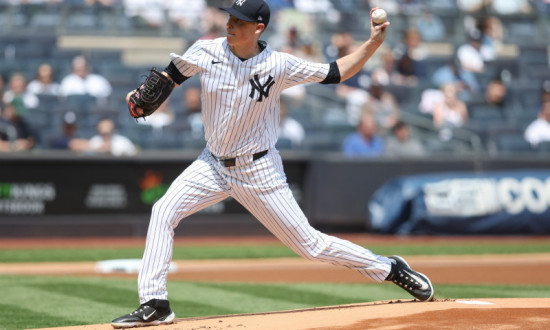
UPDATE: Anthony Banda has undergone Tommy John surgery and will miss the rest of the season.
The benefits for DFS players are multi-fold. For one thing, because guys like Yarbrough and Anthony Banda aren’t the actual starters, they’ve wound up being priced wayyyy down. Banda cost just $4,800 on DraftKings in his “start” last weekend, and he costs just $4,800 once again on Thursday this week. Yarbrough is just $5,500. These guys aren’t great pitchers by any means, but at that price they don’t have to be.
Another benefit is that people see Sergio Romo or Ryne Stanek listed as the starting pitcher instead of Anthony Banda or Ryan Yarbrough, which causes Banda or Yarbrough to go largely ignored. They don’t even show up in the list of pitchers on DraftKings with the default “Show Only Probables” filter enabled. And there’s nowhere that explicitly lists who will be coming in after The Opener; it takes a bit of digging to figure out who it will be. Then once you do figure it out, when you select Banda for your lineup, you get one of these big scary messages on the DraftKings My Lineups page:

It takes a little bit of fortitude to willingly go into battle with this staring you in the face.
But once you know who the pitcher will be and you can get over the error message, you can project accordingly. THE BAT had Banda projected as one of the top projected pitchers on the slate this past weekend against the Orioles in Tropicana Field. He finished with 27.85 points and was a mere 7% owned. Yarbrough finished at 25.55 in the same matchup, and Austin Pruitt at 20.95. And because their ownership is so low, that has helped keep their salaries low, starting the cycle over again.
The listed “starter” is purely administrative, of course. Romo and Stanek aren’t really starters, and their impact on the game is almost identical as it would be otherwise. For practical purposes, there is also no difference at all between Banda starting to pitch in the first inning or in the third. In fact, it’s actually preferable to have the pitcher you roster enter later in the game. For one thing, he gets to face the top-of-the-order hitters less. And by starting later in the game, he’ll also come out of the game later, which increases the likelihood of leaving with a lead and getting a win. This will add roughly .10 wins (or nearly half a DraftKings point) to the pitcher’s projection. It’s not huge, but it’s not negligible either. The biggest downside is on FanDuel, where the pitcher won’t be eligible for a Quality Start.
In a game where edge is getting increasingly tougher to come by, this has been a massively overlooked source of potential value. There’s no telling when people will catch on or when prices will go up, but for now this is a very exploitable advantage in the right matchups. Yarbrough figures to be the true “starter” in Thursday’s game against Oakland, and THE BAT projects him for 15 points. On a two-game early slate for $5.5k, that’s enough to easily make him the correct choice as your SP2 (he actually projects very slightly as the top pitcher overall on the slate). It will be very interesting to see what kind of ownership he garners on such a small slate, but it wouldn’t be surprising to see him under 10% or 20% once again.