
MLB Best Ball: Your Guide To Baseball Best Ball on Underdog

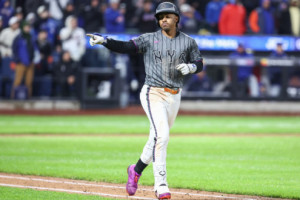
MLB season is heating up fast—the World Baseball Classic is just a few months away, followed quickly by Opening Day. That means it’s time to start preparing for MLB best ball drafts. This comprehensive guide will cover everything you need to know about MLB best ball contests on Underdog.
New Underdog users can take advantage of our Underdog promo code GRINDERS to play $5, Get $75 in bonus entries!
Underdog MLB Best Ball Contests
Underdog runs several MLB best ball tournaments throughout the season, though “The Bullpen” is currently the only contest available this early in the year. While tournament names, entry fees, field sizes, and payout structures vary, the core elements—scoring system, roster construction, and format—remain consistent across most contests.
The Bullpen
The Bullpen has a $5 entry fee and awards $10,000 to first place. After entering, you’ll be placed in a 12-person draft room to build your team.
Each roster consists of 20 players—a mix of infielders, outfielders, and pitchers. The best part of best ball is the simplicity: you never have to set lineups. Underdog automatically uses your highest-scoring players each week, so your best lineup always counts.
Here is the roster construction:
- Pitchers: 3
- Infielders: 3
- Outfielders: 3
- Flex (IF/OF): 1
- Bench: 10
Here is the scoring for MLB best ball
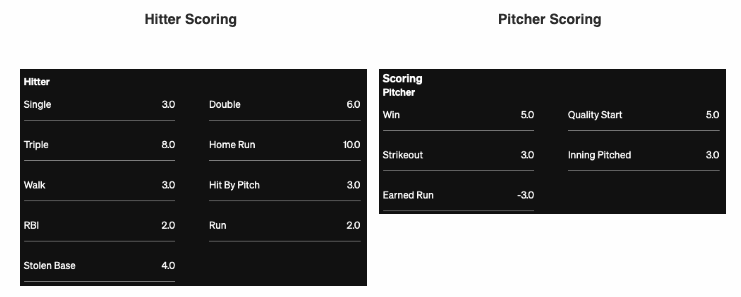
The contest consists of 4 rounds that encompass the following timeframes:
- Qualifiers: Week 1-18
- Quarterfinals: Weeks 19-20
- Semifinals: Weeks 21-22
- Championship: Weeks 23-24
To advance through each round, you’ll need to draft players who consistently rack up points all season long. Injuries, suspensions, and missed games can severely impact your chances, making durability and reliability key factors in your DFS draft strategy.
Advancing in Best Ball
To advance through rounds in MLB best ball, you’ll need players who can stay healthy throughout Weeks 1–18. Any missed time can limit your scoring potential, especially in the opening round.
Once you advance past the first pod, rounds span two weeks, which makes short-term absences less of a concern. At that stage, it’s important to target players on teams likely to be playing meaningful baseball late in the season. Pitchers, in particular, may be shut down toward the end of the year, so keep that in mind when building your MLB best ball rosters.
Prizes for Underdog’s “The Bullpen”
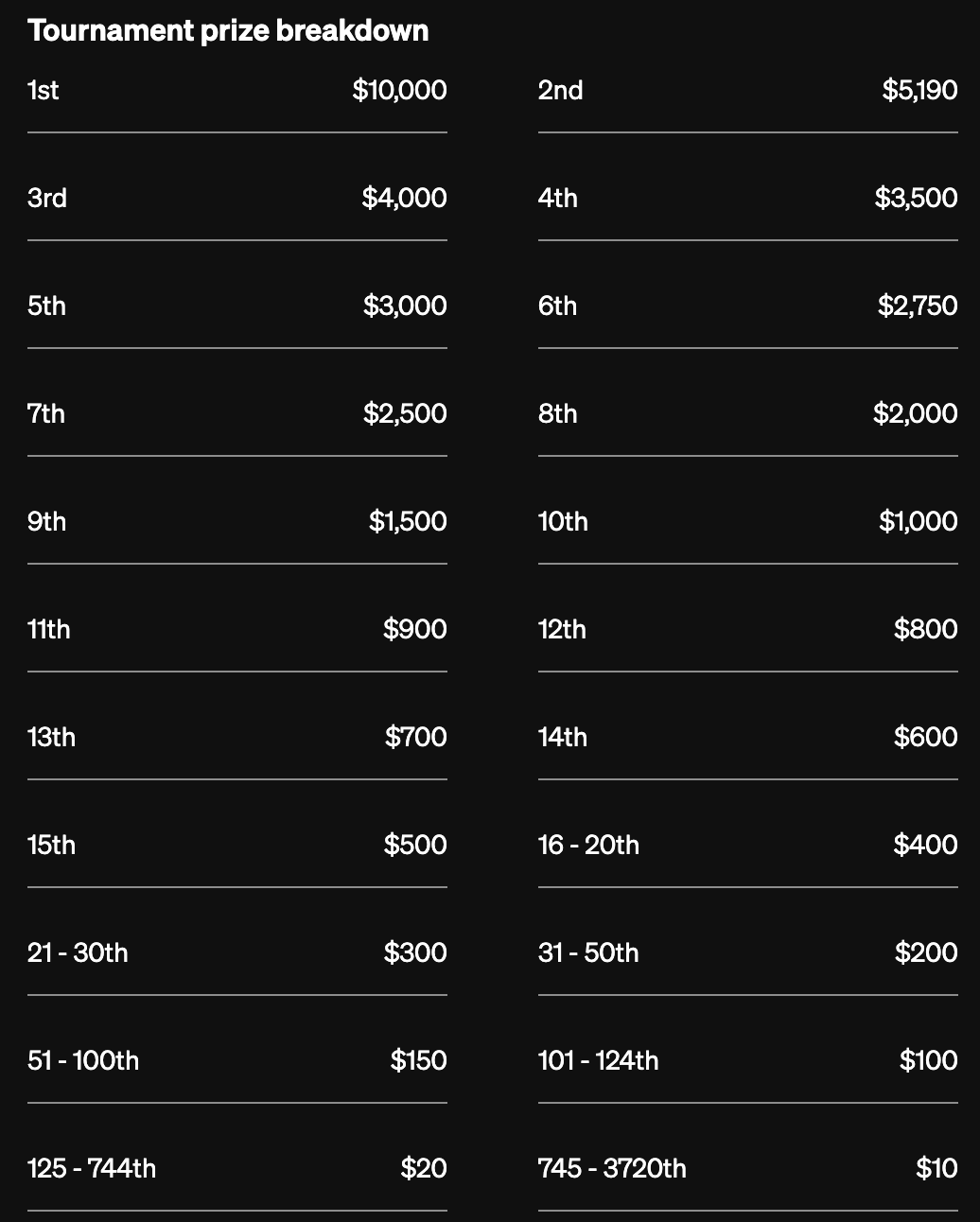
The Bullpen’s grand prize is $10,000. Reaching the 124-person final guarantees at least $100 in winnings. Even advancing out of the first round earns you $10—double your $5 entry fee.
Check out the image above for a full breakdown of the prize pool.
MLB Best Ball Strategy – How To Draft Correctly
Here are a few strategies I use when drafting MLB best ball teams:
- Prioritize durability. Target players who have demonstrated consistent health and reliability throughout past seasons.
- Draft everyday hitters. Focus on players who don’t platoon and have secure, consistent at-bats.
- Select top-rotation pitchers. Prioritize starters who anchor their team’s rotation and consistently log innings.
- Draft outfielders early. Each team requires three outfielders but only nine infielders total, so the outfield talent pool thins quickly.
- Take infielders late. While a few infielders may warrant earlier selections, it’s generally more efficient to wait until later rounds.
- Take chances on rookies late. Younger players on rebuilding teams often get late-season call-ups.
- Avoid relief pitchers. They provide limited scoring opportunities compared to starters.
- Monitor offseason movement. Track trades and free-agent signings—landing in new situations can affect their fantasy value.
Most plate appearances (last season):
- Francisco Lindor (732)
- Rafael Devers (729)
- Shohei Ohtani (727)
- Matt Olson (724)
- Kyle Schwarber (724)
Most innings pitched (last season):
- Logan Webb (207)
- Garrett Crochet (205.1)
- Cristopher Sanchez (202)
- Max Fried (195.1)
- Carlos Rodon (195.1)
MLB Best Ball: Proper Roster Construction
There’s no single “perfect” roster construction in MLB best ball—multiple approaches can work. I typically prioritize outfielders early, investing my top picks there, then focus more heavily on infielders and pitchers later in the draft. The idea is that my early outfield selections will be reliable enough to carry me through the advancement rounds.
My usual roster build includes 7 pitchers, 7 infielders, and 6 outfielders, though I stay flexible and adjust as the draft unfolds.
I also like to use my final two picks on rookie hitters or pitchers who could earn full-time roles by season’s end. Here’s an example of one of my MLB best ball builds:
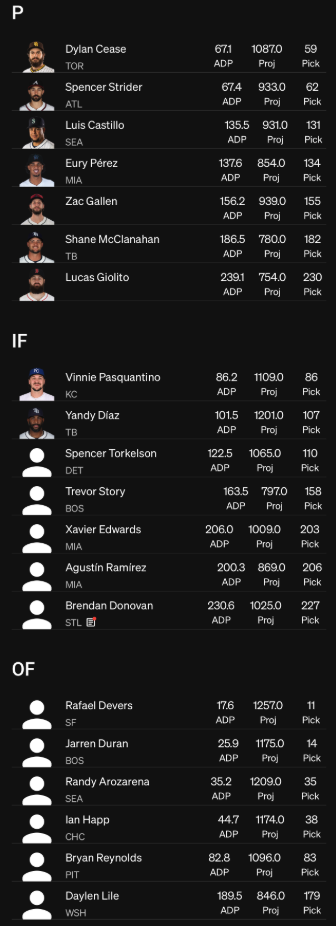
As you can see, I used my first four picks on outfielders before shifting focus to pitching with Dylan Cease and Spencer Strider anchoring my rotation. In the later rounds, I targeted young upside plays like Agustin Ramirez and Xavier Edwards and took a flier on Daylen Lile—a promising outfielder in the Nationals organization who saw some action last season. I believe he has the potential to secure a full-time role and develop into a middle-of-the-order bat.
Thanks for reading! This contest is always fascinating to break down, and I wish you the best of luck in your drafts.
While you’re here, be sure to check out my PGA best ball guide as well.
Image Credit: Imagn